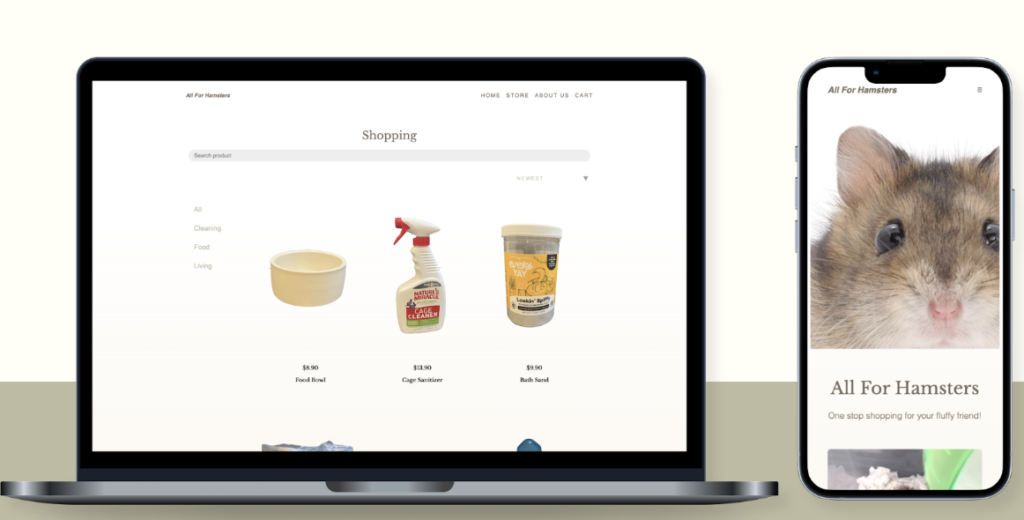
This is a PHP e-commerce website that sells hamster supplies and features an easy-to-use interface. The project’s objective is to explore the fundamentals of PHP and the usage of databases.
Background
As a hamster owner myself, I understand the struggle of finding essential products for these little animals, especially since they are not as popular as cats and dogs.
However, all living creatures deserve proper care, including a safe living environment, good food, enrichment, and exercise methods. This inspired me to create an e-commerce platform exclusively for hamsters, where new owners could easily find everything they need to care for their pets.
Research
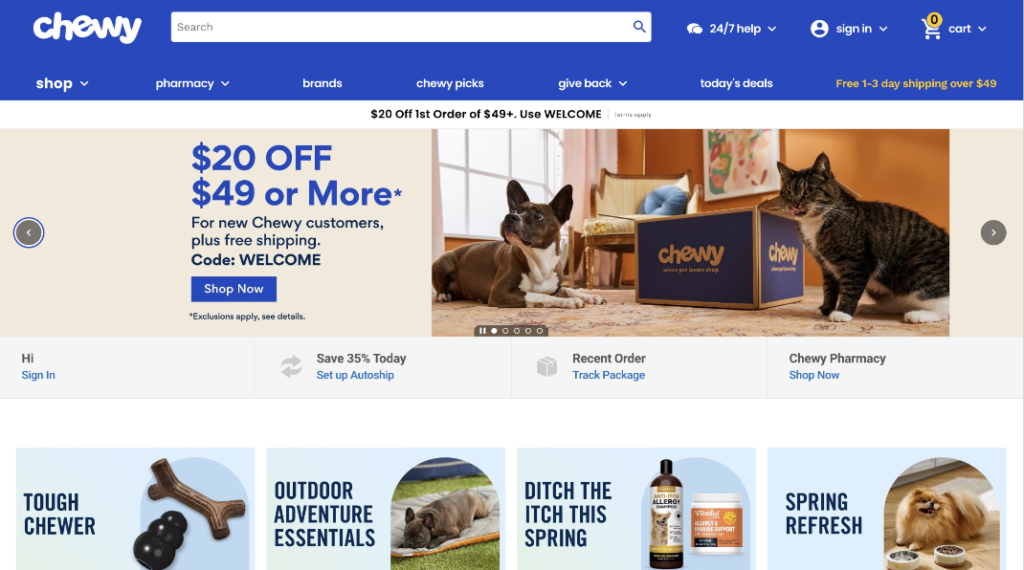
Browsing chewy.com, the leading pet specialty e-tailer, it’s clear that the number of products available for hamsters is significantly lower than those available for dogs. Additionally, many of the products listed are not specialized for hamsters but instead fall under the broader “small animal category,” which includes rabbits and guinea pigs.
UI Screen
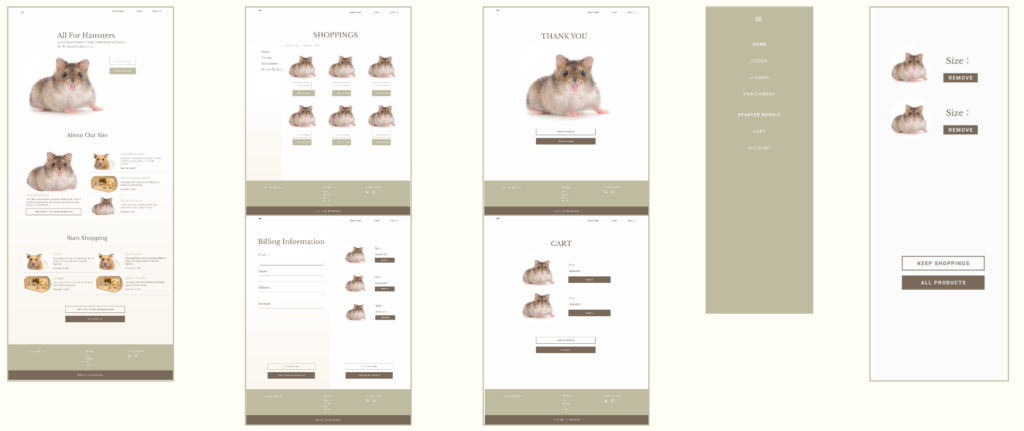
Considering it’s a web development project where the implementation of functionality is primary, I used a relatively conventional layout and design for an e-commerce website.
Design System
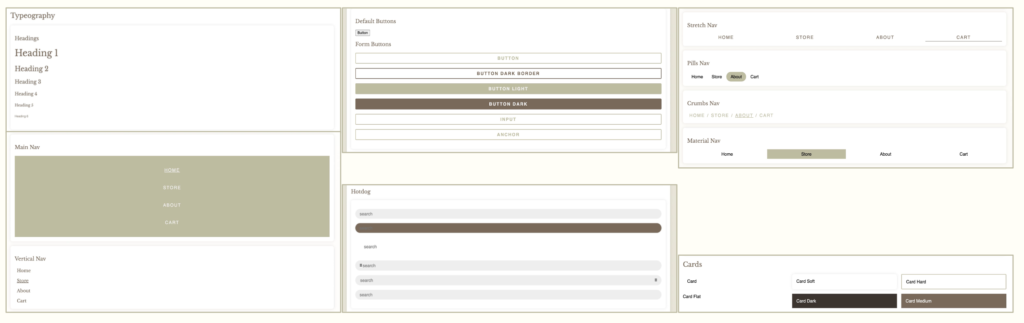
I developed a web-version style guide page to ensure consistency across different components. The style guide also demonstrates the dynamic effects such as color changes on button hover. It also promotes the efficient reuse of components throughout the website.
Techniques.
Main Website:
- PHP, CSS, HTML, JavaScript, and MySQL were used.
- MySQL was used to store and edit data for the website, including information on products.
- PHP was used to interact with the data, such as obtaining authentication and editing data.
- Grid system was defined for responsive website.
Admin Page:
- Enable administrators to directly add, edit, or delete products from the front-end without having to modify the back-end dataset.
Results.
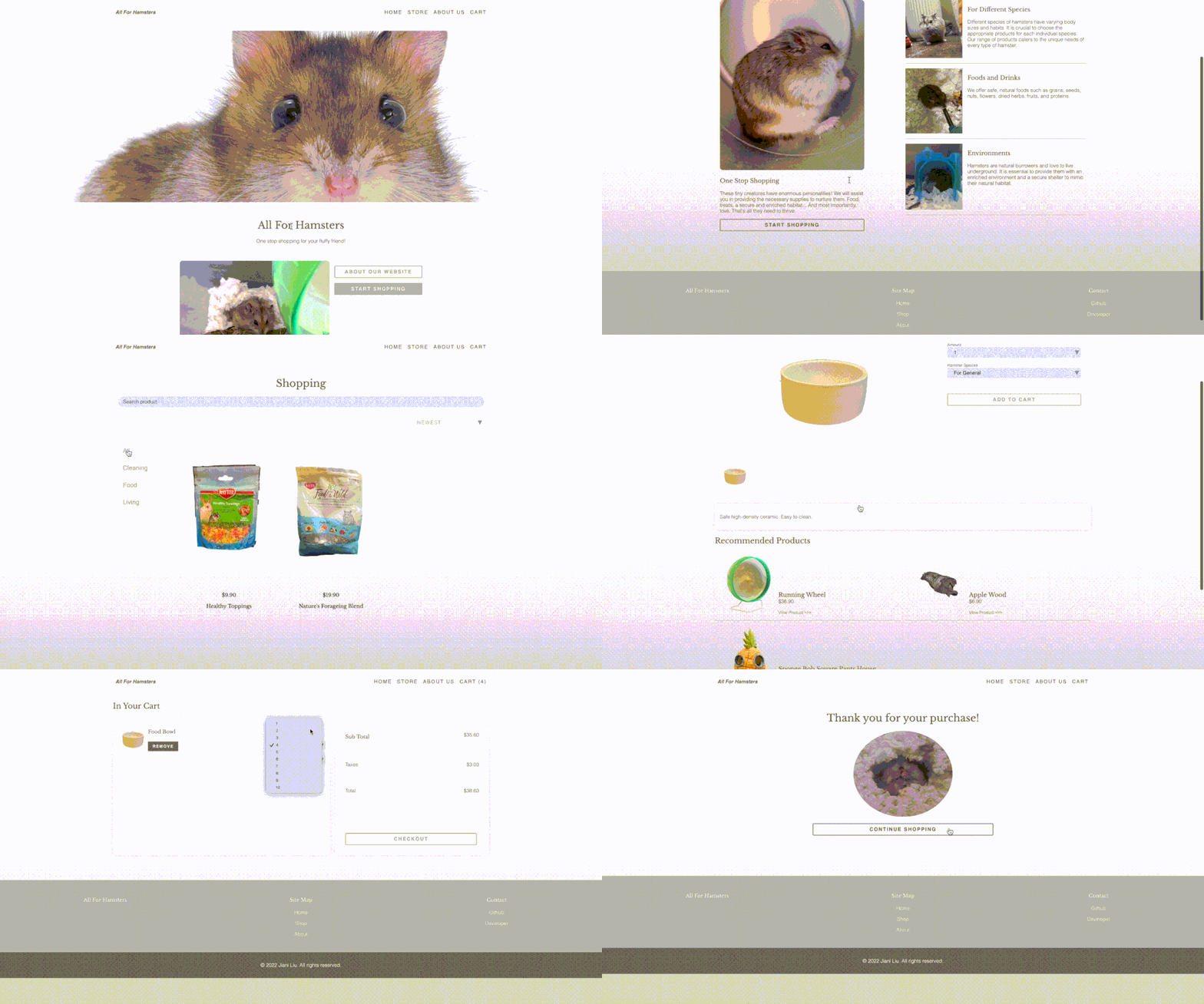
Takeaways.
What I’ve Learned…
Overall, the experience of designing and developing an e-commerce website dedicated to hamsters was both challenging and rewarding. Throughout the project, I learned more about using PHP, designing a grid system for responsive website design, and working with datasets. I also learned to implement a digital style guide as a first step to ensure easier reusability and consistent visual design throughout the website.
- Make the design more creative by avoiding conventional grid layouts.
- Add more functionality to the website, such as surveys to recommend product bundles based on users’ needs.